Where is that blockbuster Brazil?
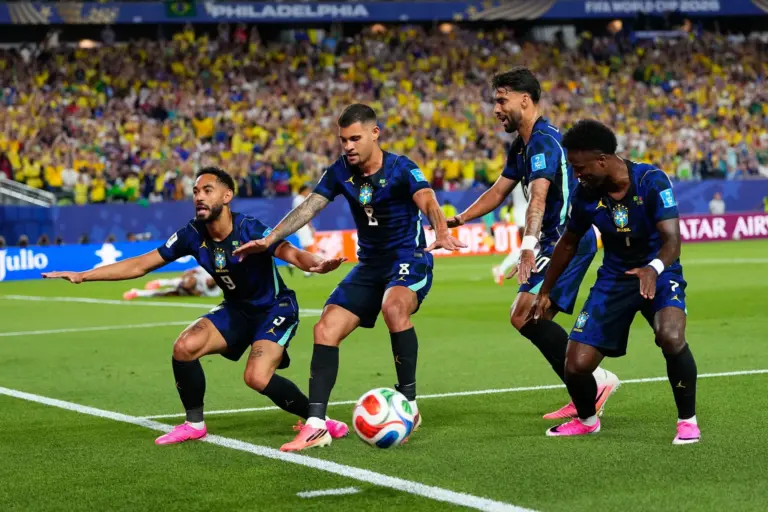
Brazilian football means the joy of a group of yellow butterflies dancing in groups. In this year's World Cup, the canvas of the first two matches is not found in the canvas of the bowled, beautiful football Brazil!
Brazil is the samba dance in the World Cup, they want the rhythm of the ball, the beauty with the speed, the art with the attack, but so far Carlo Ancelotti's Brazil looks like they are dancing without instrumental music.
Haitian The 3-0 win against the scoreboard is undoubtedly a relief but football on the field? There is little to be satisfied with, devastated by political unrest, lagging behind in the FIFA ranking, Brazil was supposed to win against a team made up of infamous footballers. The question is, was this victory like a team that announced to be the world champion? The answer is clear - no.
After two matches, Brazil holds only four points, a draw, one win, not in danger as a result, but still looking for their own identity as a performance, five-time world champions.
Haitian Brazil finished the match with three goals in the first half, but Mathews Kunya scored two goals and Vincitas Junior scored one goal, but after the break, the whole team lost momentum, no swift attack, no speed, no speed, no squeeze, but a limited ability to squeeze the opponents, but a limited-capacity team like Haiti made a few dangerous attacks in the second half. If there was a stronger opponent, the value of those mistakes might have been much higher.
The biggest problem in Brazil is that the only sharp weapon in both matches is that Vinicitas Jr. has been the only sharp weapon in both matches, his speed, dribbling and one-to-a-old ones came from the position of the most dangerous moments, but the question is, if Vini can't play his best game in any match? If the opponents strapped him in double marking? Who will pull the attack of Brazil?
It's not even the shadow of the devastating winger of Barcelona. It's slow in deciding, the last pass is very limited, and the game has been very limited.
On the tactical side, Ancelotti's team is still messy, there is no quick pressing after losing the ball. The fullbacks are going up and down again, the distance between the two centerbacks is increasing, which is taking advantage of the opponent. In midfield, the ‘double pivot’ is not able to protect the numerical advantage in the attack, and the team is fragile in the attack, and on the other hand, the attack is more than the extra dimension of Vini.
Most worryingly, this Brazil still has no impression of the old ‘Jogo Bonito’, no one-touch football, no off the ball movement, no spontaneity in attack. Players don't play their normal football, play football in the mantra of eternal enjoyment. Where is the Brazil come?
After the draw against Morocco, Brazil was relieved to beat Haiti, but it is not enough for the team to dream of winning the World Cup, they need dominance, rhythm, confidence and intimidate football.
Brazil has not been seen so far.
The next match against Scotland is not only three points, but also the test to regain their true identity because the World Cup knockout opponents will not be able to win the match there, Vincitas will not win the match alone. The whole team will have to wake up, or Brazil's World Cup journey can stop before July 19, even with the five star jerseys on.
World Cup final on July 19.