How India boosted the image of the Pakistan Army by attacking

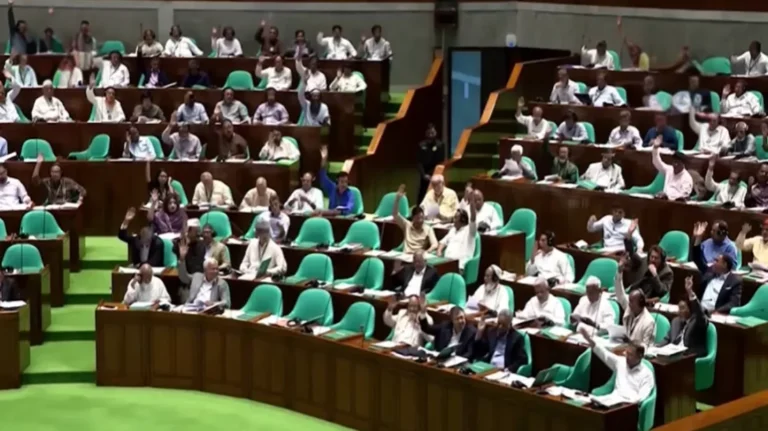
On May 9, 2023, thousands of people took to the streets in major cities in Pakistan. They even targeted government and private institutions, especially those associated with Pakistan's powerful military, with attacks.

The targets included the army headquarters in Rawalpindi, the residence of a top military commander in Lahore (which was set on fire), and several other structures and monuments.

The protesters were mainly supporters of the Pakistan Tehreek-e-Insaf (PTI) and were protesting against the arrest of their leader and former Prime Minister Imran Khan.

Imran Khan was detained in the Islamabad High Court on corruption charges.

Although Imran Khan was released less than 48 hours later, the protests were seen as an unprecedented challenge to the military's rule.

The army has long been considered the most powerful and influential institution in Pakistan, maintaining authority in almost all areas.

Exactly two years later, on May 11, 2025, thousands of people took to the streets again. But this time they took to the streets not against the military, but to praise and support them.

Last week, India and Pakistan engaged in a brief but intense military clash, with both sides attacking each other's installations.

Such a major conflict has not been seen between the two countries since the 1971 war.

The domestic impact of this near-war conflict on Pakistan is clear: public support for the army has increased sharply, and it is seen as the force that will protect the country from Indian aggression.

A Gallup Pakistan survey of more than 500 respondents from May 11 to 15, 2025, found that 96 percent believed Pakistan had won the conflict.

According to preliminary data and survey trends provided to Al Jazeera, 82 percent of people rated the military's performance as "very good." Less than 1 percent expressed dissatisfaction.

Most notably, 92 percent of people said that their perception of the military has become more positive because of this conflict.

Transition from 'Black Day' to 'Just War Day'

On May 11, the day after US President Donald Trump announced a ceasefire between India and Pakistan, people took to the streets in Pakistani cities with cars and motorcycles.

They waved the national flag and carried posters praising the army, especially the army chief, General Syed Asim Munir. There was a sense of joy and relief in the air.

For the previous four days, Pakistan had been engaged in a tense military conflict with its arch-rival India.

Two weeks after 26 civilians were killed by armed attackers in Pahalgam, Indian-administered Kashmir, on May 7, India launched missile strikes on various locations in Pakistan-administered Kashmir and Pakistan's Punjab province, blaming Islamabad for the attack.

At least 51 people were killed, including 11 soldiers and several children.

Over the next three days, the two nuclear-armed countries fired missiles, drones, and artillery at each other, bringing the subcontinent's 1.6 billion people to the brink of all-out war.


Industrial use of groundwater will have to be priced: Environmental Advisor

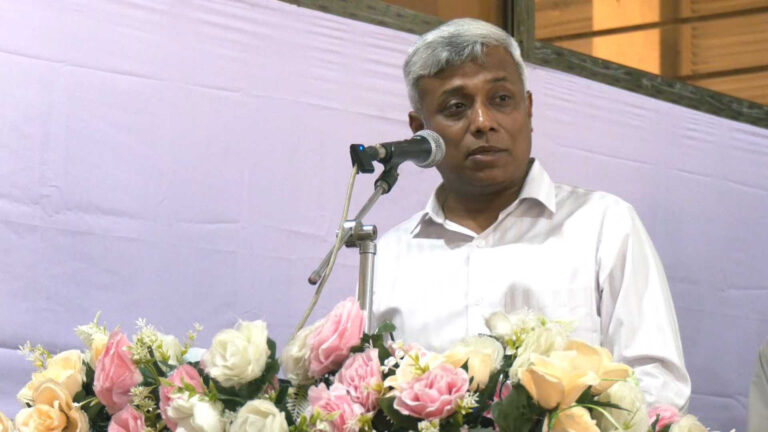
Syeda Rizwana Hasan, advisor to the interim government's Ministry of Environment, Forests and Climate Change and the Ministry of Water Resources, said, "Industries will have to pay a price for using groundwater. This measure is being taken to control pollution of reservoirs and rivers and to force reuse of water used by industries."

Syeda Rizwana Hasan, the chief guest at the 'River and Wetlands Symposium 2025' event at the PTI auditorium in Gazipur city on Saturday evening, said this. The advisor also said, 'We will sign an agreement to de-encroach and de-pollute four rivers of Dhaka and give an action plan. Because, we cannot do these in our time. However, the restoration of the Turag River will start within our time.'

At the beginning of the program, chaired by Gazipur Deputy Commissioner Nafisa Arefin, Bangladesh River Foundation Chairman Muhammad Monir Hossain presented an article on rivers.

The speakers at the event said that several other small rivers and streams flow through Gazipur, including the old Brahmaputra, Shitalakshya, Banar, Chilai, Luandaha, Shaldah, Goyali, Turag, Banshi, Balu, Goallar, Paruli. There are also several freshwater reservoirs including the beautiful Bolai and Moksh Beel. Despite being devastated by encroachment and pollution, these rivers and reservoirs are still influencing the society and culture of not only their own districts but also the surrounding areas. Research has shown that the quality of water in this district is declining. In some places, the amount of dissolved oxygen in water is even going to zero. River pollution is entirely responsible for this. Today's event is very important to find a way to protect rivers and wetlands to overcome this situation.

Sixteen proposals were presented from the Rivers and Wetlands Symposium. Speakers called for effective action on them.

The event was attended by special guests including Dhaka University of Engineering and Technology Vice Chancellor Mohammad Joynal Abedin, Gazipur Development Authority Chairman Mohammad Abdul Mannan, Gazipur Metropolitan Police Additional Commissioner Mohammad Zahidul Hasan, Gazipur District Police Superintendent Chowdhury Md. Jaber Sadek, among others.


Why is the BJP government waging this 'all-out war' against the Maoists?

The military operation launched by the central and state governments against Maoist rebels in the Indian state of Chhattisgarh has practically become a battlefield. More than 10,000 troops have been deployed in the Karigatta hill forests of the state. Searches are being carried out in the deep forest areas with helicopters. This operation, known as 'Operation Zero' or 'Operation Kagar', is being considered the biggest step in suppressing Maoists.

The operation is being directly led by India's ruling Hindutva BJP government. They are in power at both the state and central levels in Chhattisgarh. The government has intensified its crackdown on Maoists since the beginning of this year. At least 201 rebels have been killed. Many of those killed are tribals. On Wednesday alone, 27 people died, including the last general secretary of the Maoist organization, Nambala Keshava Rao.

However, human rights groups and opposition parties have expressed deep concern over the operation. They allege that many innocent tribals are also being killed under the guise of 'Maoists'. They have called on the government to stop the fighting and hold talks.

According to government data, more than 11,000 people, including civilians and members of the security forces, were killed in Maoist conflicts between 2000 and 2024. Of these, at least 6,160 were rebels.

Who are the Maoists and what do they want?

The armed Maoist movement in India began in 1967 with a peasant uprising in Naxalbari, West Bengal. This 'Naxal' movement was led by Charu Majumdar, Kanu Sanyal, etc. Their demand was that land should be given to landless farmers and action should be taken against the exploitation of landlords.

This movement gave rise to the Communist Party of India (Marxist-Leninist), which believed in armed rebellion beyond the democratic process. The revolutionary philosophy of Chinese leader Mao Zedong was their main inspiration. However, over time, this party broke into many parts. The original CPI(ML) is now a formal political party. They participate in elections.

BJP's aggressive strategy

During the Congress government in Chhattisgarh (2020-2023), 141 rebels were killed. But after the BJP government came to power, the number of deaths rose to 223 in 2024. State Chief Minister Bishnu Dev Sai says, 'Now the final phase is underway, we are rapidly moving towards a Naxal-free India.'

Union Home Minister Amit Shah is also regularly visiting the field to support this campaign, spending nights in army camps. He has announced that India will be made 'Naxal-free' by March 31, 2026.

Currently, there are 320 government security camps in the Bastar region alone. There are about 3 million security personnel in the camps. More than 66,000 security personnel are deployed in the entire state of Chhattisgarh. Surveillance is being carried out in the dense forests through various modern technologies including drones, thermal imaging, satellite monitoring.

Allegation: Killing of tribals in fake encounters

But the most serious question about the operation has been about human rights violations. According to the People's Union for Civil Liberties, there has been evidence of at least 11 fake encounters in the past year and a half. For example, in March, the police claimed to have shot dead three rebels in Bordga village in Bijapur district. But locals say the three were picked up at night, shot and branded as 'Maoists'.

In 2012, 17 tribals were killed by security forces in the village of Sadek Guda and in 2013, 8 tribals. In the subsequent investigation, the High Court judges said that all the deceased were innocent. Yet, to this day, no case has been filed against any police officer.

Is the Maoists' capabilities diminishing?

In 2011, the then Inspector General of Police of Chhattisgarh, Vishwaranjan, estimated that around 10,000 armed Maoists and 40,000 militia members were active in the Bastar region. Although these numbers are difficult to determine with precision, the Maoists were capable of carrying out deadly attacks on security forces at that time. In 2010, they ambushed a forested area in Chhattisgarh and killed 76 paramilitary personnel. Three years later, another attack killed many people, including a Congress leader.

Currently, Bastar IGP Sundarraj P says that there are about 1,000 armed Maoists and another 15,000 people associated with them who are active.

Internal Maoist reports admit that their membership has dwindled. Units have become smaller and ammunition is running out. Of the 40 members of the Central Committee and Politburo that once comprised them, only 18 are now free. All the rest have been arrested or killed.

The Maoists may have weakened in Chhattisgarh, but they are regaining influence in the neighboring state of Madhya Pradesh. Maoism is an ideology—it cannot be ended by force alone. Until a society free of economic inequality is created, this ideology can return in a new form.


US Embassy in Dhaka advises US citizens to be vigilant about protests

The US Embassy in Dhaka has advised US citizens to be vigilant due to protests across the country, including Dhaka, in response to the conflict in Gaza, Palestine.

The advice was given in a post on the US Embassy's website, Facebook page and X (formerly Twitter) handle in Dhaka on Monday.

The post said that there could be a day-long protest today, Monday (April 7, 2025). University students are planning to participate in mass demonstrations and protests across the country, including Dhaka, in response to the conflict in Gaza. The US Embassy in Dhaka will limit its services in the afternoon today, Monday (April 7) due to possible traffic congestion and protest rallies towards the embassy.


Results of oral examination for two Metrorail posts published

The results of the oral examination for the positions of Ticket Machine Operator and Customer Relations Assistant of the 100% government-owned Dhaka Mass Transit Company Limited (DMTCL) have been published. 139 candidates have passed the Ticket Machine Operator and 63 candidates have passed the Customer Relations Assistant positions.

Candidates who pass the oral examination will have to collect their appointment letters from DMTCL's Diabari office on February 10. The results of the oral examination will also be communicated to the successful candidates through SMS.


Government employee hospital written exam schedule for 191 posts published

The written examination schedule for the recruitment of 191 vacant posts of 36 categories in the 11th-20th grade in the Government Employees Hospital has been published. This information was given in a notification by the institution. The notification said that the written examination for 191 posts of 36 categories will be held on April 18 and May 2 and 16. The examination will be conducted at Eden Women's College in the capital.

The time and date of the written examination will also be communicated to the candidate through SMS on their mobile phone. To participate in the examination, visit this website


10 percent discount on air tickets for the New Year

Biman Bangladesh Airlines has announced a special discount on tickets for the new year. According to the announcement, passengers will get a 10 percent discount if they buy tickets from Biman's website and mobile apps.

Biman Bangladesh Airlines General Manager (Public Relations) Bosra Islam gave this information in a press release sent to the media on Sunday.


BCS recruitment: 227 people excluded under old rules

Many candidates recommended by the PSC from the 28th BCS to the 42nd BCS were denied appointments due to not being Awami League ideologists. Of these, 259 have been appointed during the current interim government. This has been stated in a report by the Ministry of Public Administration.

Meanwhile, the Ministry of Public Administration issued a notification on Monday appointing 1,896 people from the 43rd BCS. 267 people who received recommendations from the Public Service Commission (PSC) were excluded from this appointment. The Ministry of Public Administration says that 227 of these candidates have adverse comments from intelligence agencies. Due to this, they have been temporarily considered unsuitable for appointment. The remaining 40 did not participate in the health examination.

Public administration experts say that the general rule is that a candidate with a criminal record, a criminal record or any other such offense should be considered unsuitable for appointment. But in reality, for years, political affiliations of candidates or their families and relatives have been sought. The desire for change that began with the movement against quotas in jobs and ended with the student uprising in 2024, led many to hope that such a system would end. But in reality, it has not stopped yet.

This time, there is a lot of discussion after the publication of the notification for the appointment of 227 people who passed the 43rd BCS exam. Many people are also making various comments on the social media Facebook about the issue. The excluded candidates have been vocal about this. The Ministry of Public Administration has taken the matter into consideration. The ministry said in a notification on Thursday that any application for reconsideration from among the 227 people who are unsuitable for appointment is being accepted. The opportunity to apply for reconsideration is open to everyone.

The Ministry of Public Administration also explained why these candidates were excluded. The notification said that the PSC temporarily nominated 2,163 people for appointment to various cadres through the 43rd BCS examination and recommended them on January 25 last year. Then, according to the rules, the pre-character of the candidates was verified through the special branch of the police and the district administrators, and a total of 99 people were excluded, including 40 who were absent in the health examination and 59 people considering the agency's report, and the remaining 2,064 people were appointed, and a notification was issued on October 15. Since then, questions have been raised about the acceptability of this appointment from various perspectives. In view of this, it was decided to further verify the pre-character of the 2,163 people recommended by the 43rd BCS through the state intelligence agencies NSI and DGFI in order to determine transparent candidates and re-establish trust and confidence in the government recruitment process. Reports on the suitability or unsuitability of 2,163 candidates were received from NSI and DGFI.

According to the report, adverse comments were received about the background of 227 candidates. Due to adverse comments, 227 candidates were temporarily considered unsuitable for appointment and it was decided to conduct further verification and inquiry into their cases. However, 40 people who were absent from the health examination were considered unsuitable for appointment. In this situation, a notification for the appointment of 1,896 people was issued on December 30.

Firoz Mia, a job expert and former additional secretary of the Ministry of Public Administration, told Prothom Alo, "If someone has a criminal case against them, has been in jail, or is a notorious terrorist, the police will report them by mentioning their records. If someone gets a job by cheating, that should also be taken into consideration. But no one can be excluded for any other reason or political consideration other than this type of crime. But this has happened in the past and is happening now. This should not be done in any way, it should stop."


Two teenagers arrested in Kamrul murder case on Hanif flyover

Police have arrested two teenagers on charges of involvement in the murder of Kamrul Hasan (23) on Hanif flyover in the capital's Sayedabad. They were arrested in a raid in the Karatitola area of Jatrabari around 6:30 am on Saturday. One of them is 17 years old and the other is 16 years old.

According to the Dhaka Metropolitan Police's media and public relations department, Kamrul Hasan was walking on the Hanif flyover in the Sayedabad area at around 8:40 pm on Wednesday. At that time, some robbers stopped him. At that time, the robbers threatened him with country-made weapons and tried to snatch his cash and mobile phone. When he resisted, one of the robbers hit Kamrul in the chest with a sharp knife. Then they snatched a mobile phone and 7,000 taka from him and fled. Later, Kamrul was rescued by local people and taken to Mugda Medical College Hospital, where the doctor on duty declared him dead. Kamrul's father Imam Hossain filed a murder case with Jatrabari Police Station as the plaintiff in this incident.

Police said the two arrested were active members of a professional robbery gang. They used to rob mobile phones, cash and valuables from pedestrians in and around Hanif Flyover in Jatrabari. They mainly robbed to raise money for drug consumption.


Passengers held hostage on moving bus in Savar, robbed of money, mobile phones, gold ornaments, 1 injured

A group of robbers boarded a moving bus on the Dhaka-Aricha highway in Savar, near Dhaka, and took passengers hostage. They took them hostage with sharp weapons and stole money, mobile phones and gold ornaments. A passenger was stabbed while trying to stop the robbers.

The robbery took place on the Dhaka-Aricha highway from in front of the Bangladesh Public Administration Training Center (BPATC) in Savar to the gate area adjacent to Mir Mosharraf Hossain Hall of Jahangirnagar University on Friday (December 20) evening. Md. Shamim Hossain (30), who was injured by the robbers' knife attack, has been treated at the private Enam Medical College Hospital in Savar. He is a resident of Sreepur Notunnagar area of Ashulia.

Talking to the bus passengers and the bus owner, it was learned that a bus carrying passengers with the Welcome banner left Motijheel, Dhaka for Chandra on Friday afternoon. When the bus reached in front of BPATC in Savar at around 6:30 pm, a group of 3-4 hijackers boarded the bus. They held some people hostage with sharp country-made weapons. Later, they snatched money, mobile phones and gold ornaments from 15-20 passengers on the bus. When some tried to stop them, they were beaten and one of them was stabbed. Later, the hijackers went down the speed breaker on the Dhaka-Aricha highway in front of the gate adjacent to Mir Mosharraf Hossain Hall of Jahangirnagar University.

Eyewitnesses said that after the bus reached the main gate of the university, some students stopped the bus and questioned the driver and the driver's assistant. Later, they took the bus to the Bishmail area. Upon receiving the information, the police reached the spot and took the bus, along with the driver and the driver's assistant, into their custody.
Meanwhile, the bus passenger injured in the stabbing, Md. Shamim Hossain, was first given primary treatment at Jahangirnagar University Medical Center. Later, he was taken to Enam Medical College Hospital. Hasan Mahbub, a doctor on duty at the hospital's emergency department, said, "A person injured in the stabbing named Shamim has been brought to the hospital. There are stab marks on his body."

A passenger on the bus, Harun Or Rashid, said that after the bus passed the Savar Radio Colony area around 6:30 pm, three young men armed with sharp weapons suddenly took the bus passengers hostage. First, they stabbed a passenger sitting in the front seat of the bus. Later, they looted money and belongings from all the passengers.

A representative of Welcome Paribahan, who did not wish to be named, said, "3-4 people got on the bus from in front of BPATC in Savar with small knives. Then they held a knife to the throat of a child on the bus. They were between 25-30 years old."

Ashulia Police Station Sub-Inspector Alok Kumar Dey said, passengers said that some robbers from the BPATC area boarded the bus, held some hostage at sharp weapons, and quickly got off the bus after the robbery. Later, students of Jahangirnagar University detained the bus and the driver. After reaching the spot after receiving the information, several passengers narrated the incident. Since the incident was in the Savar Model Police Station area, the victims have been advised to file a complaint with the Savar Model Police Station.

Savar Model Police Station Officer-in-Charge Mohammad Jewel Mia said that a team of them is working on the matter. Details will be announced later.